


Choosing an advertising platform becomes difficult when everyone recommends something different. One business gets enquiries from Google. Another sells products through Instagram. You want to know which approach makes sense for your budget.
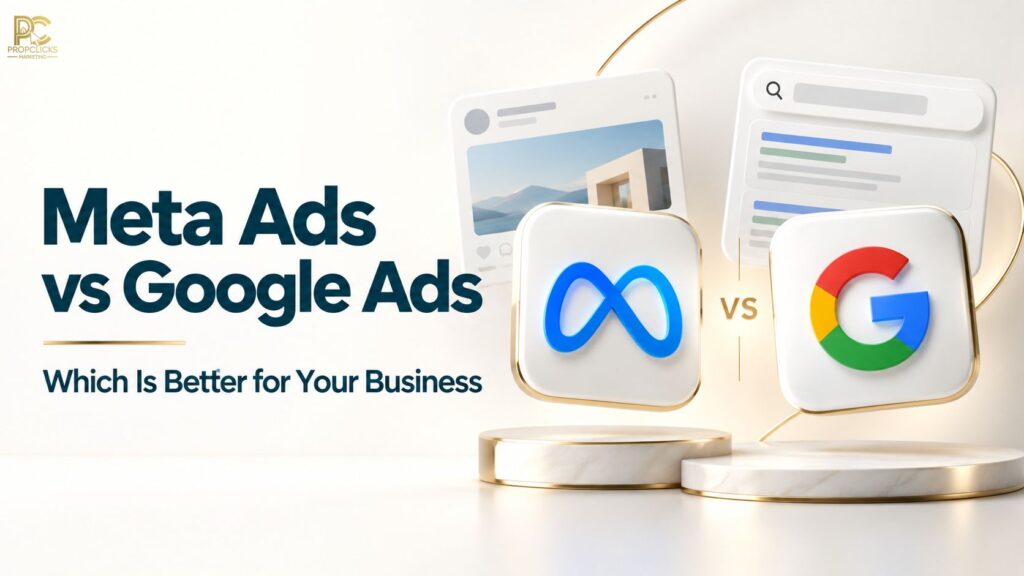
Meta Ads can help people discover your offer, while Google Search Ads can connect you with customers already searching for it. The right choice depends on your business, the demand for your product or service and how effectively you turn interest into sales.
When comparing Meta Ads vs Google Ads, start with how your customers buy. That will tell you more than another business’s cost per click.
Meta Ads vs Google Ads at a Glance
Both platforms can support sales and lead generation, but the way customers encounter your advertising can differ.
| What Matters | Meta Ads | Google Ads |
|---|---|---|
| Customer behaviour | Often reaches people browsing social content | Search campaigns reach active searchers; other campaigns reach people across Google’s channels |
| Creative requirements | Strong images, videos and clear offers | Relevant search copy, plus visual assets for other campaign types |
| Useful starting point | Introducing products and demonstrating their value | Reaching existing demand through relevant searches |
| Lead quality | Depends on messaging, targeting and qualification | Depends on intent, campaign setup and qualification |
| Cost | Varies by audience, competition and campaign execution | Varies by campaign type, competition and campaign execution |
| Meaningful results | Qualified enquiries, purchases and acquisition cost | Qualified enquiries, purchases and acquisition cost |
Google Ads includes more than search advertising. YouTube, Display, Shopping and other campaign options also play a role. For that reason, “Google captures demand and Meta creates demand” is a useful starting comparison, but it does not describe everything either platform can do.
When Google Ads Is a Good Starting Point
Google Search Ads is worth considering when potential customers already search for the product or service you provide.
Imagine someone searching for “emergency plumber near me.” They have a problem, they need help and they are actively looking for a provider. A relevant advertisement can put your business in front of them during that decision.
However, the search term matters. Someone looking for “how to fix a leaking tap” may want instructions rather than a paid service. Both searches relate to plumbing, but they represent different needs.
This is why effective Google Ads management involves more than selecting keywords. Your advertisement, landing page and offer should all match what the customer is trying to accomplish.
For example, an ad promoting emergency repairs should lead to a page explaining availability, service coverage and how to request help. Sending that visitor to a general homepage creates extra work for them.
PropClicks’ Google Ads management services help businesses plan and optimise campaigns around relevant searches and measurable goals.
When Meta Ads Is a Good Starting Point
Meta Ads can be a useful starting point when seeing your offer helps people understand its value.
Consider a clothing brand launching a new collection. Potential customers might not know the brand exists, but a video showing the fit, fabric and styling could give them a reason to explore it.
The same applies to products that solve an everyday problem. A demonstration of a foldable bottle fitting into a small travel bag communicates something that a product name alone may not.
Service businesses can also use this approach. A clear explanation of your process, a helpful demonstration or a genuine customer story can introduce your work to people who have not searched for it yet.
The advertisement still needs a specific purpose. Attractive visuals may earn attention, but customers also need to understand what you offer and what happens next.
Our Meta Ads management services bring campaign planning, ad creative, conversion tracking and ongoing optimisation together around your business goals.
Which Platform Delivers Better Leads
A lead is someone who has expressed interest. A qualified lead is someone whose needs, budget and circumstances fit your offer. Those are different outcomes.
Google Search can connect you with people actively looking for a solution, but that does not guarantee every enquiry will be suitable. A broad search term or unclear landing page can still attract the wrong customer.
Meta campaigns can generate interest before someone begins an active search. Some prospects may need more explanation or follow-up, while others may be ready to act immediately.
To compare lead generation performance fairly, ask:
- How many enquiries match your service or product?
- How many people respond when contacted?
- How many progress to an appointment, proposal or purchase?
- What does it cost to acquire a customer?
Form questions, honest ad copy and timely follow-up all influence the outcome. Changing platforms will not fix an offer that people misunderstand or enquiries that nobody handles.
Compare Customer Acquisition Cost Before Cost Per Lead
A low cost per lead can look impressive while hiding an expensive sales process.
Here is a hypothetical example using advertising spend only:
| Metric | Campaign A | Campaign B |
|---|---|---|
| Advertising spend | ₹20,000 | ₹20,000 |
| Leads received | 100 | 40 |
| Cost per lead | ₹200 | ₹500 |
| Customers acquired | 2 | 5 |
| Advertising cost per customer | ₹10,000 | ₹4,000 |
Campaign A produces more leads at a lower price. Campaign B produces more customers from the same advertising budget.
These numbers are illustrative, not Meta or Google benchmarks. Either platform could produce either result.
Your evaluation should also include customer value, profit margin and the costs of creative production and campaign management. A business selling a recurring service may assess acquisition costs differently from a retailer selling a low-margin product.
The practical question is whether the customers you acquire justify the total investment.
How to Choose for Your Business
The following examples offer starting points for testing, rather than fixed rules.
Local Service Businesses
If customers search for your service when they need it, Google Search may be a sensible first test. Keep the campaign focused on the services and locations you actually cover.
Meta may also be useful when your service benefits from explanation or visual proof. A home renovation business, for example, could demonstrate its work through project videos and clear descriptions of its process.
Ecommerce Brands
For ecommerce, consider both search demand and product appeal. Are shoppers already looking for your product category, or do they need to see a demonstration before understanding it?
Google Shopping can present product information to shoppers, while Meta creative can introduce products through videos, images and customer-focused messaging. Your pricing, delivery information and product pages still need to support the purchase.
A coordinated ecommerce marketing strategy can help connect advertising with the shopping experience that follows.
B2B and Professional Services
Business buyers may compare several providers before making contact. They often need information about suitability, implementation, costs and ongoing support.
Google Search can help reach relevant enquiries, while Meta can be tested for educational content and audience engagement where appropriate. Judge performance by qualified opportunities and eventual customers, allowing for your normal sales cycle.
Should You Run Meta Ads and Google Ads Together
Using both can make sense when each has a clear role.
Someone might discover your business through an Instagram advertisement, search for your brand later and return to enquire. Another customer might find you through Google before checking your social profiles for reassurance.
That does not mean you should divide your budget equally or launch every campaign type at once. A limited budget spread across too many activities can make the results difficult to interpret.
Start with a focused offer and a measurable goal. Expand when you understand what is working and what another channel could contribute.
Keep your organic presence in mind too. Consistent profiles and useful posts can support the impression made by your ads. PropClicks’ social media marketing services help businesses build that supporting presence.
When measuring both platforms, check your sales records for duplicate attribution. Two platforms may claim credit for the same purchase, so their reported totals should not automatically be added together.
What to Prepare Before Launching Ads
Before investing, check the entire journey from advertisement to enquiry or purchase.
Your offer should explain who it is for and what the customer receives. Your landing page should follow through on the advertisement’s promise. Forms, checkout and contact options should work properly on mobile.
Test conversion tracking before relying on campaign reports. Decide who will respond to enquiries and how you will record whether they become customers.
Finally, define success before the campaign starts. “More traffic” is too vague if the business actually needs booked appointments or profitable orders.
Good preparation gives either platform a stronger starting point.